Oregon Humane is most known for adoptions, but we’re also here for pet owners every step of the way—offering medical care, behavior training, a pet food bank and social services, and when the heartbreaking day comes, end of life services.
Our Community Resource Center is at the heart of these crossroad moments, receiving all incoming calls and messages for both campuses and our Community Veterinary Hospital. The department is an introductory touchpoint for all our programs and services—supporting those in our community seeking care and guidance.
Can I Ask Who is Calling?
When pet owners are in need, Oregon Humane is often one of the first places they turn. Our CRC team is available seven days a week from 7 a.m. to 7 p.m., accepting approximately 9,400 calls every month. In 2025, they received a record-breaking 112,919 calls for the year.
CRC team members are the calming voice over the line, walking people through some of the hardest moments they may face as pet owners. This team is responsible for triaging each call to provide information that will connect the caller to the right line of support. Whether it be finding an urgent care appointment; or even helping a concerned neighbor report animal cruelty, the team at the CRC are the guides helping people find the pathways to care.
Care at Oregon Humane and Beyond
What makes the CRC stand out is their mission to provide a tangible next step to every caller in need—even when that next step is outside of the services we offer.
“We never send someone away without another option, even when we don’t have availability or a program/service to meet the caller’s need. The hardest part of the job is when we are unable to assist directly, so we do our best to fill whatever gap they’re searching for,” says Alex Sloane, Community Resource Center Manager.
The team uses a massive handbook, currently over 150 pages long, filled with resources for every possible scenario. The handbook covers everything from local veterinarians to resources for humans who may be fleeing a domestic violence situation—a surprisingly common request as the first step towards leaving abusive relationships is often seeking care for beloved animals.
The CRC specialists receive calls from all across the state and beyond—including states like California, Texas, and even Florida. Diligently, this team ensures every caller, no matter their location or situation, knows what to do next when they hang up the phone. The team is so successful in helping community members navigate complex issues that they often receive glowing reviews even when the care the caller needed wasn’t available through Oregon Humane.
“From the moment I explained Dakota’s symptoms, [CRC staff] not only showed immense compassion and empathy…I can’t thank [CRC staff] enough for your grace and empathy in such a devastating time in my life.”
recalls a caller who was helped by CRC specialists.
Phone Triage
The CRC frequently functions like a 911 line for pets needing urgent or time-sensitive support. To quickly connect callers with the right information, the team is in constant communication with every Oregon Humane department—most commonly our Humane Law Enforcement, Admissions, and Medical teams, as well as Kelly Bremken, Oregon Humane’s Veterinary Social Worker.
The CRC specialists also stay in constant contact with one another. This level of communication helps the team find solutions quickly and has even led to a happy reunion: when one CRC specialist received a call regarding a lost dog, they were able to immediately connect with another CRC specialist who was coincidentally on the phone with a community member who had just found the missing pup.
As each call shifts from joyful to serious, the team encounters many scenarios, and callers can quickly become emotional. “Our job is to provide compassion to every caller. Without knowing the full story, we assume everyone’s best intentions,” says Alex.
Lately, the team has seen a notable rise in the number of calls from desperate pet owners seeking resources for pet food assistance, financial assistance for medical care, and resources for their animals when family members have been detained by ICE.
When the team assesses abuse or neglect situations, they must expertly discern when to transfer a call to a Humane Law Enforcement agent, or when to advise the caller to call the police or another agency. These calls can be especially traumatic due to the extreme nature of the situation.
Working through calls like these can be emotionally draining and Oregon Humane takes staff mental health seriously. The team takes regular deescalation training to build tools for helping callers, and themselves, find calm in stormy situations. Thanks to their training and patience, the average call resolution rate is under five minutes —though complex calls can easily take longer.
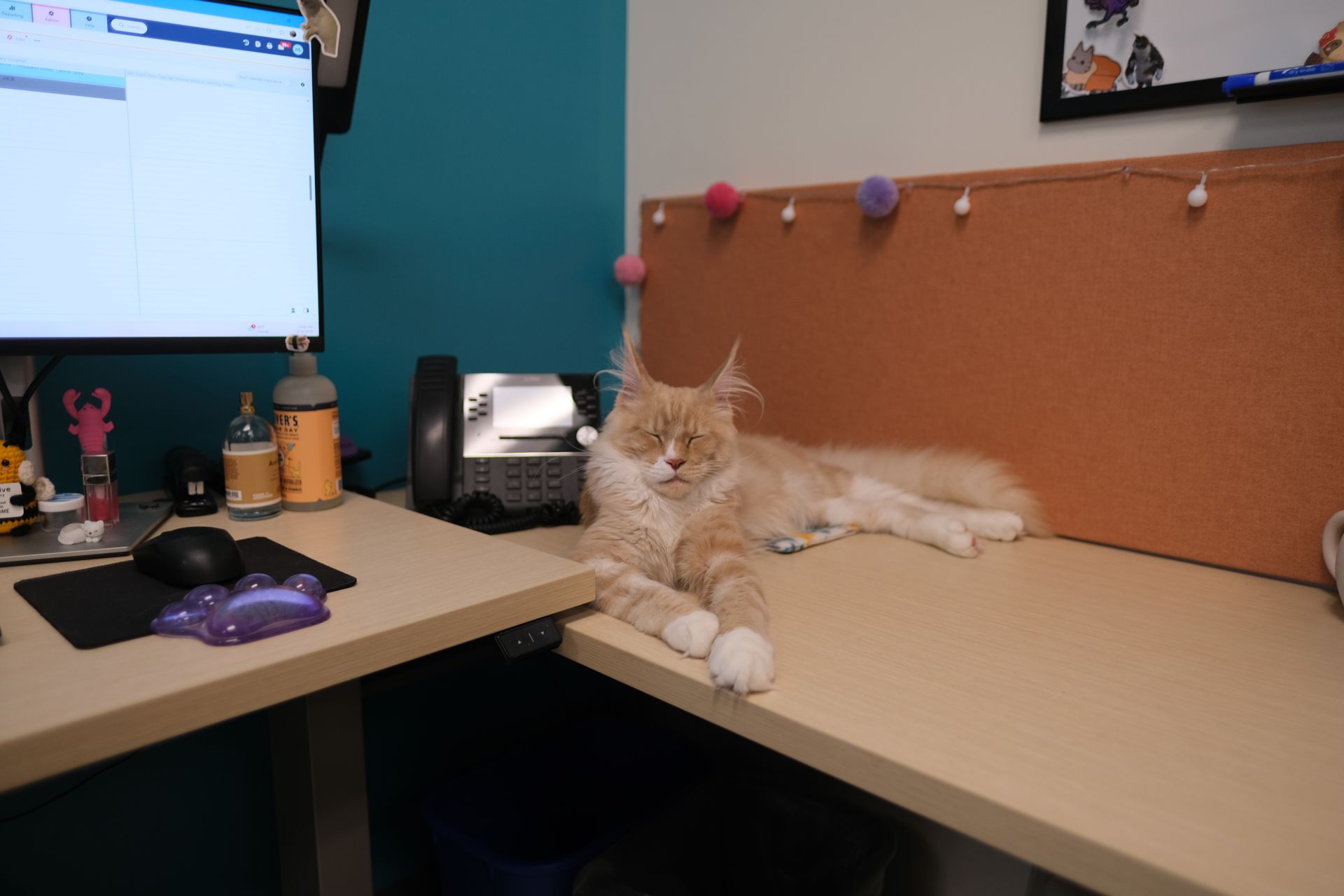
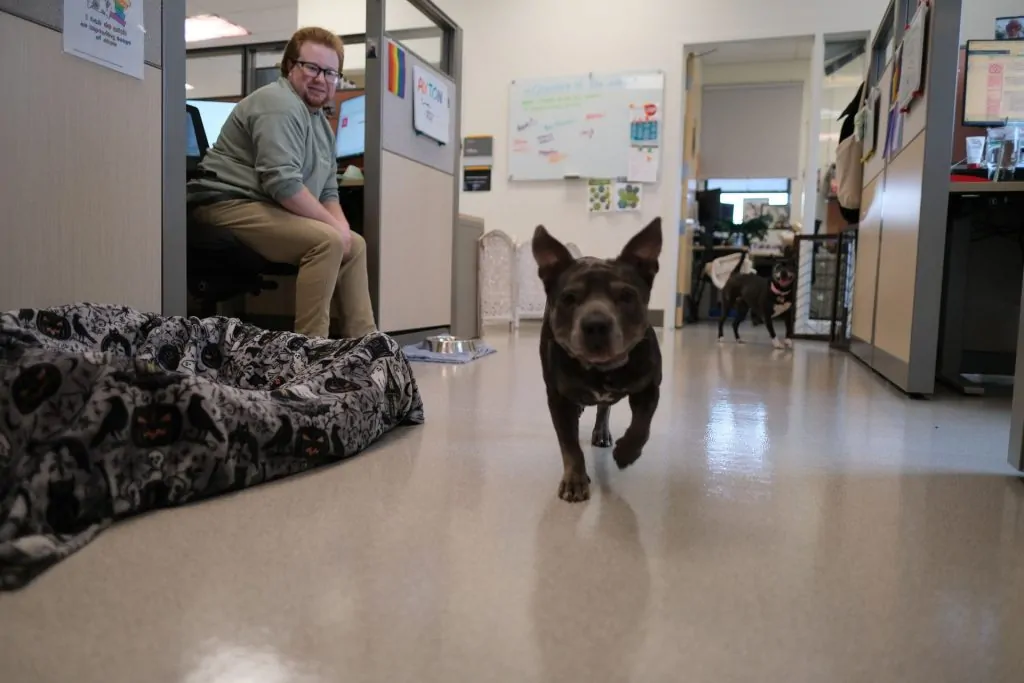
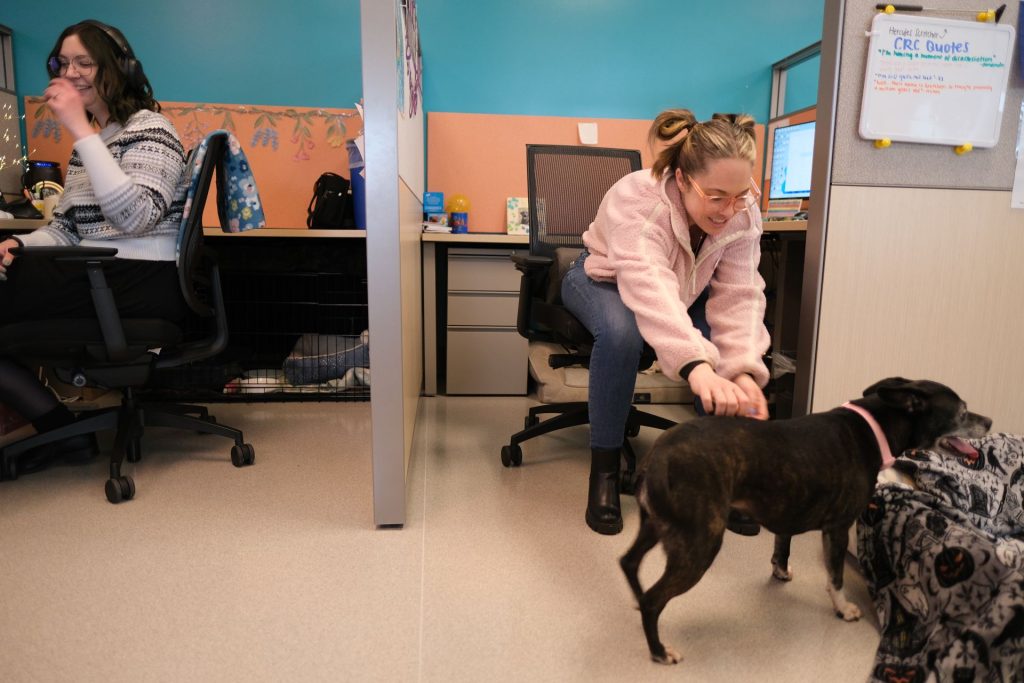
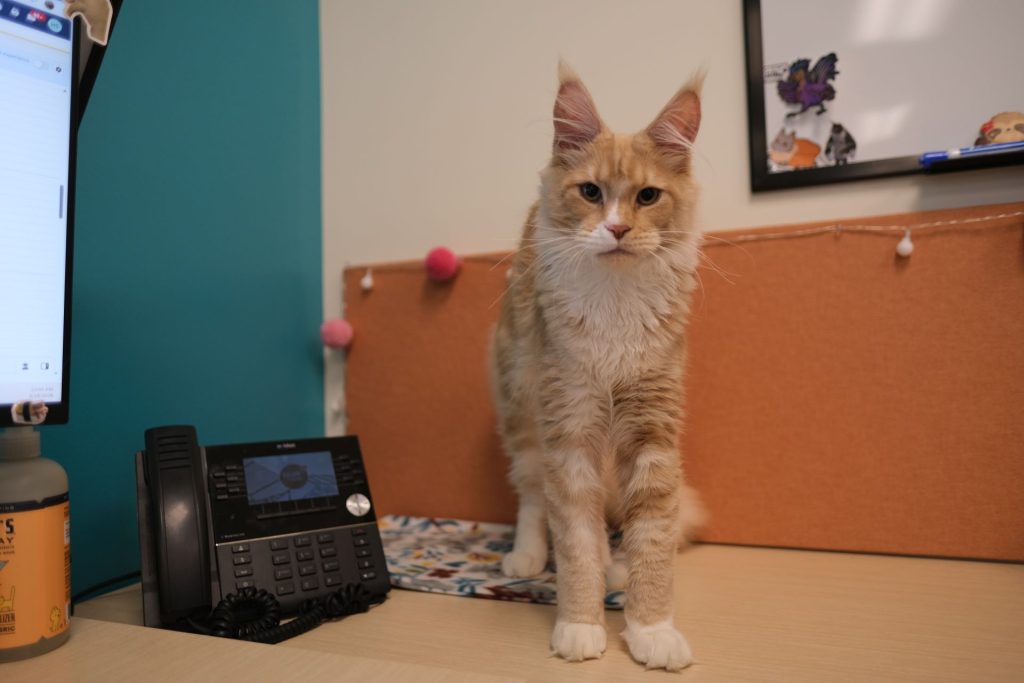
To keep things grounded, the CRC office is an intentionally cozy space, filled with staff pets—often cats—and heartwarming animal videos that play on rotation on a large screen to keep spirits up.
Compassion in Action
From easily solvable questions to complicated, high-stakes issues, every conversation that takes place at the CRC is an emotional one due to the deep love that callers have for the animals in their lives.
“It’s all for the love of animals and the love of people. To work in the CRC you must love people and want to help them,”
says Alex.
No other central hub exists for providing access to resources and pet care in Oregon. While an internet search is always available, in fraught and emotional moments, the calm, compassionate voice of a human and fellow animal lover can be the guiding light and beacon of hope that keeps people moving forward when times are hardest.
Find this story and even more insightful and joy-inducing content in our spring edition of Boop! magazine, to be released April 22. To receive a digital copy of Boop!, make sure you subscribe to our mailing list and to receive a print version mailed to your house, make a donation of $25 or more!