
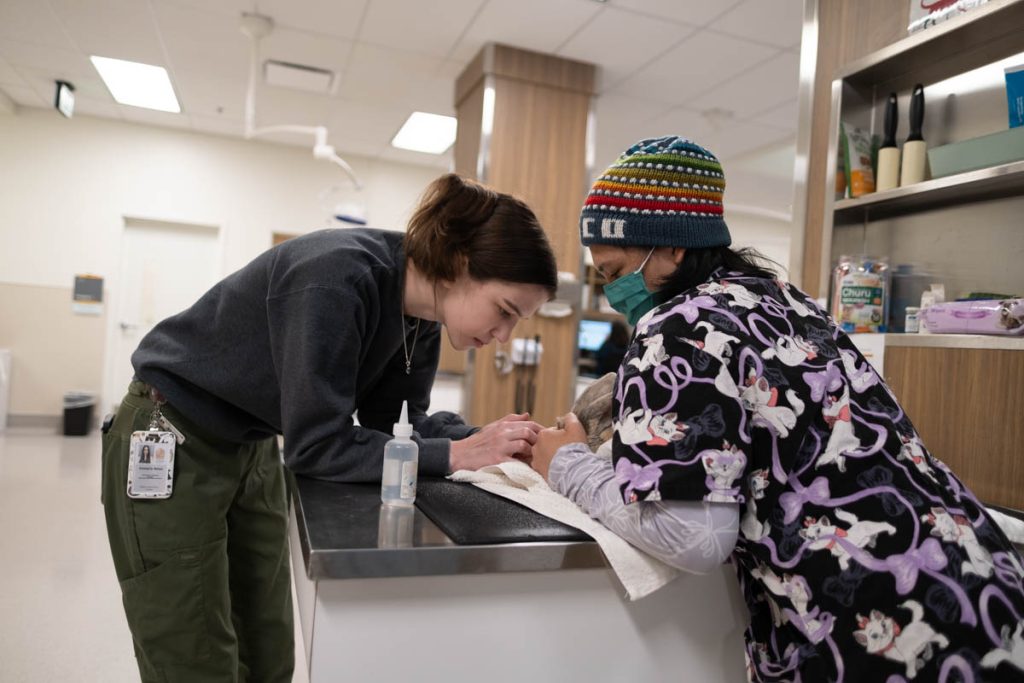
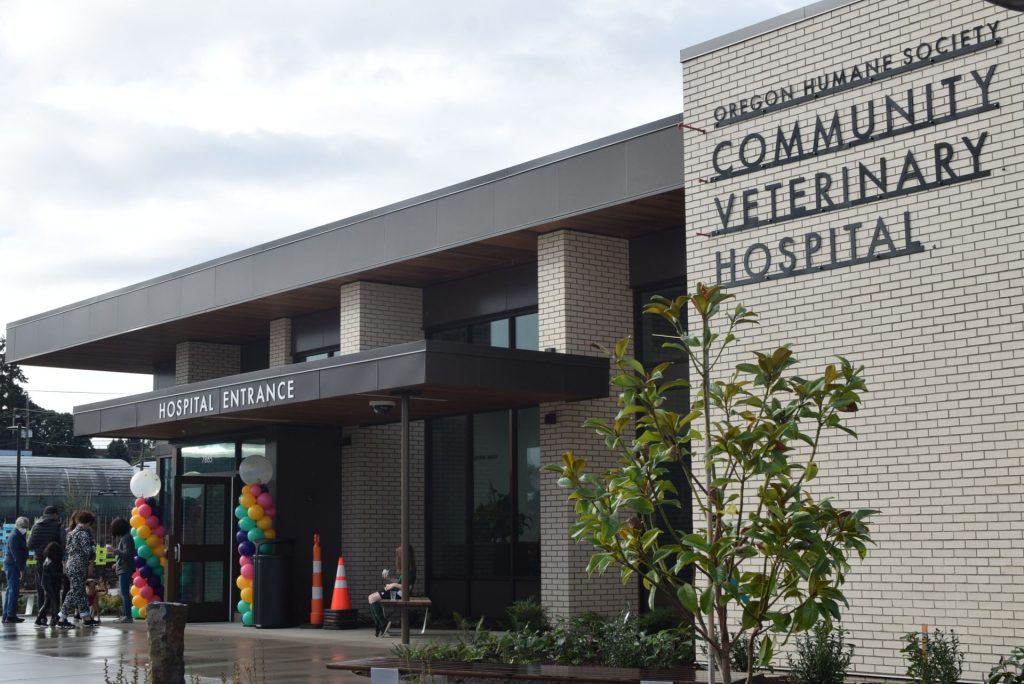
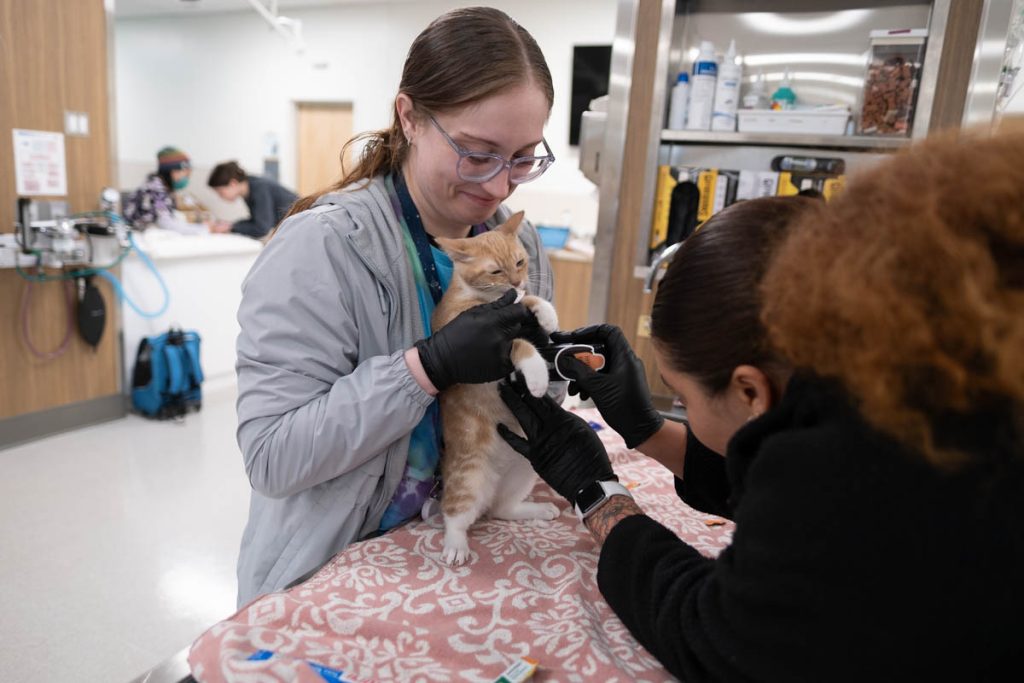
Our Community Veterinary Hospital offers high-quality urgent care appointments for pets in our community, seven days a week. By using a fear-free, collaborative model of care, our aim is to be a calming landing pad for pets, and their people, when life gets messy.
While the CVH does not offer emergency care, many local emergency pet clinics are open 24 hours and available to help at a moment’s notice. Understanding what constitutes an urgent care appointment versus an emergency room visit can be difficult to discern—especially during stressful situations.
Our handy guide will help you feel more prepared when those unexpected (and sometimes scary) moments arise.
Emergency Care = Life-Threatening
Emergency care is anything that may become life-threatening or presents as a rapidly worsening condition in need of immediate intervention.
Some signs that your pet need emergency care:
- Difficulty breathing
- Collapse
- Cluster seizures
- Trauma (i.e. hit by a car)
- Active bleeding or major wounds
- Toxin ingestions
- Severe pain causing abrupt change in mobility
- Pale gums
- A pet that is not responsive
- A pet that is not able to urinate
Urgent Care = Can’t Wait a Month
Urgent care situations need prompt attention and cannot wait a month for a primary care visit. Pets in this scenario should be seen by a veterinarian within 24 to 48 hours but are not in immediate life-threatening danger.
Examples of common urgent care scenarios:
- Ear infections
- Vomiting, diarrhea, decreased appetite
- Abscesses, Minor wounds
- Limping or signs of pain
- Eye, redness, squinting, discharge, pain
- Urinary conditions (straining to urinate, but still producing urine or blood in urine)
- Vaginal discharge
- Skin irritations/rash
- Coughing, sneezing
The Three Numbers to Keep on Hand
When your pet has ingested something scary, becomes ill, or needs emergency care, the last thing you want to be doing is an internet search.
Save these three numbers on your phone and put a sticky note on your fridge (a good resource for pet sitters, dog-walkers, or family members) so you can be ready to call and get support when you need it.
- Your Primary Care Veterinarian: Keep this number on file for daytime incidents to get quick advice from your trusted team.
- An Urgent Care Veterinary Clinic: Keep this number on file even if you have a regular veterinarian as same-day appointments are often limited or not available.
Community Veterinary Hospital: (503) 285-7722 - 24-Hour Pet Emergency Clinic: Select a close-to-you location that is open 24 hours, for when you need emergency care. Emergency rooms can also help you navigate the best path for care over the phone and determine if the care your pet needs is an emergency.
Dr. Forman’s First Aid Kit Essentials
Having a small arsenal of items to help you triage your pet until you can get care is a good idea. For active animals, like hiking or camping pups, make sure to have a small supply both at home and on-the-go, such as in your car or hiking gear.
Community Veterinary Hospital Medical Director, Dr. Forman, put together a small list of essentials to get you started.
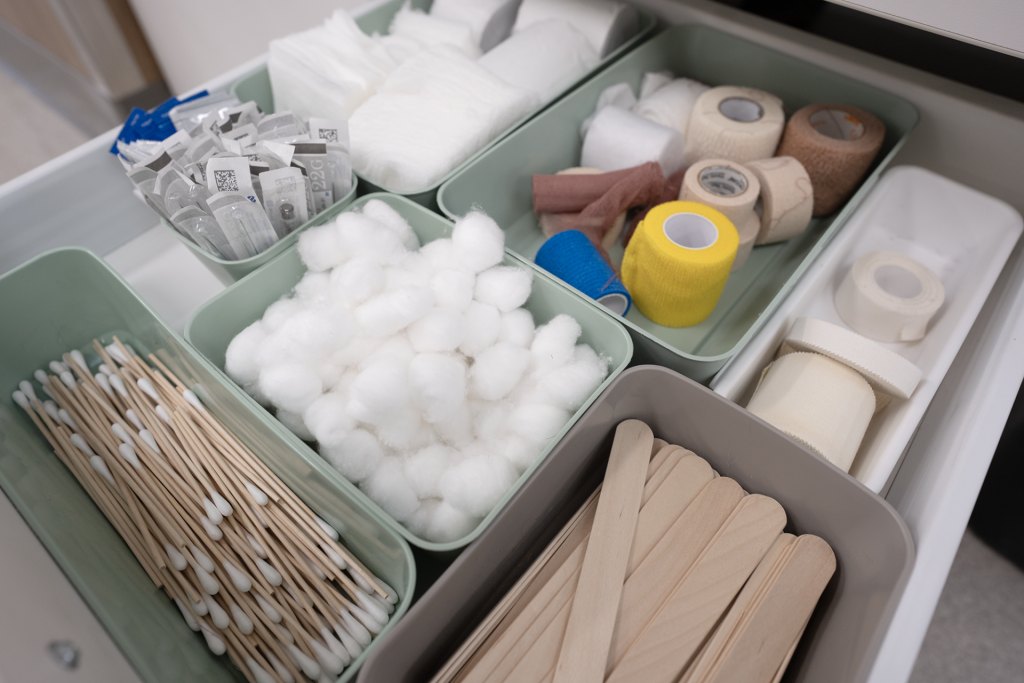
- Gauze pads and gauze rolls for wrapping wounds or muzzling an injured animal
- Vet Wrap or self-adherent bandages
- Adhesive tape
- Spare leash and collar
- Saline Solution for cleaning wounds or flushing eyes.
- Digital Thermometer: (pro-Tip: clearly labeled to indicate it’s for pets only!)
- Styptic powder: to stop a broken toenail from bleeding—a common injury.
- Disposable Gloves: for humans to wear when cleaning up a wound.
- Towels for restraining cats, cleaning or padding
- Muzzles: even the most affable pets may try to bite when they are in severe pain. Having a way to safely and comfortably restrain and handle your pet in an emergency is important. (Never muzzle a pet that is vomiting.)
- Veterinary Records: Unfortunately, a magical vet database that houses all your pet’s history available to any and all veterinarians doesn’t exist (darn it!). So, it’s a wise idea to keep an updated record of your pets’ medical record if you ever need to seek care outside of your primary veterinarian.
- Sterile lubricating jelly to protect wounds, eyes

Judgement-Free Zone
The truth is life happens to all of us. No matter if your pet ate something weird, escaped your yard and got injured, or has a worsening skin issue that you’ve been meaning to resolve, our Community Veterinary Hospital is here for the entire life cycle of your pet.
If you haven’t seen a vet in a while or your pet is nervous at veterinary clinics, don’t let that stop you from seeking care. We are here to help by offering a collaborative and collective approach to your pet’s care.
Here for Pets, Not for Profit
In 2025, we distributed more than $900,000 in financial assistance to families in need—helping to increase access to care in our community and keep more families together!

Community Veterinary Hospital
Visit Us
Open 7 days a week, 7:30 a.m.–5:30 p.m.
7865 NE 14th Pl., Portland, OR 97211
Contact Us
(503) 285-7722