Oregon Humane’s Behavior Modification Program is a lifeline for cats with the most intense behavior needs. These felines typically have no other options or path to adoption due to their fear, trauma, lack of socialization, or inappropriate behavior.
In 2025, the Feline Behavior Modification team worked with 99 shy and fearful cats, and as more animals arrive in need of training, the program continues to grow.
Gaining International Recognition
Erika Sims, Manager of the Cat Behavior Modification Program and a 26-year veteran at Oregon Humane, is changing perceptions and saving lives with her expertise.
Erika’s work is grounded in years of experience, education, skills assessment, and mentorship. This dedication to her field has earned Erika the prestigious designation as a Certified Shelter Behavior Consultant for cats (CSB-C) by the International Association of Animal Behavior Consultants.
“Certification shows clients, employers, and colleagues that my work meets recognized professional standards. It reflects that my knowledge and decision-making have been carefully evaluated by experienced behavior consultants through a rigorous, structured process. With this expertise, shelter cats receive professional behavior modification that supports the expression of natural, species-specific behaviors, helps them regulate their responses to triggers, and lowers their overall stress levels.”
says Erika.
Adding a New Team Member
In March, the program also welcomed another full-time Feline Behavior Modification Trainer to the team to help with the growing demand.
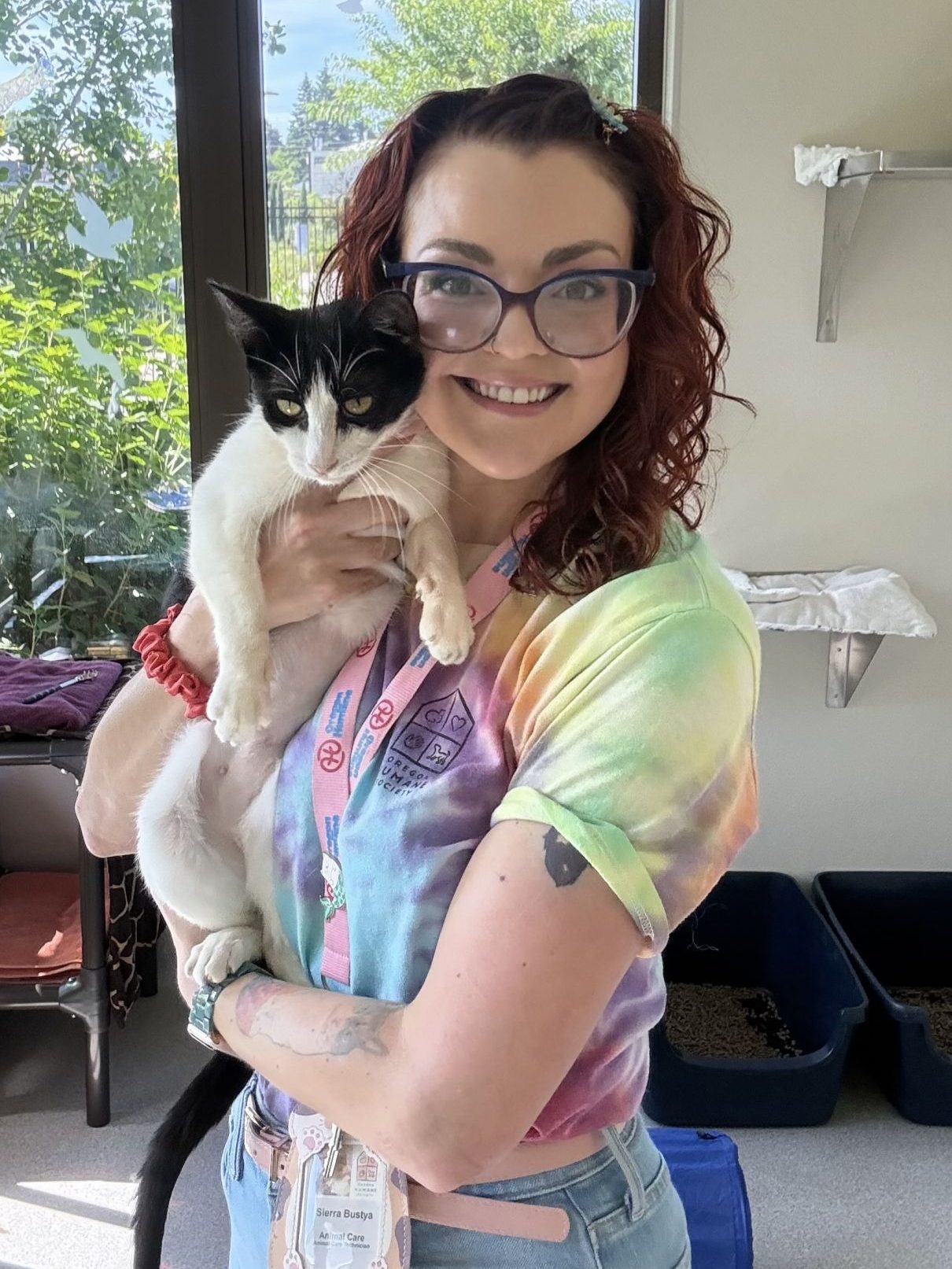
While Sierra Bustya officially joined the team recently, she has held other roles at Oregon Humane for more than four years and has been drawn to the feline program since she started.
“I love being able to dedicate my time to the cats in the program and support them through every stage of their journey—from the moment they enter BMOD, to their adoption, and even through post-adoption support. It’s so rewarding to watch a kitty that was fearful and shut-down blossom into a happy, confident cat,” says Sierra.
Sierra has been around Oregon Humane long enough to remember a time when cats in the BMOD program were housed at the main shelter. The busy environment was loud and space was limited, making it difficult for fearful cats to feel safe and thrive. As a result, cats often took longer to graduate from the BMOD program than other animals.
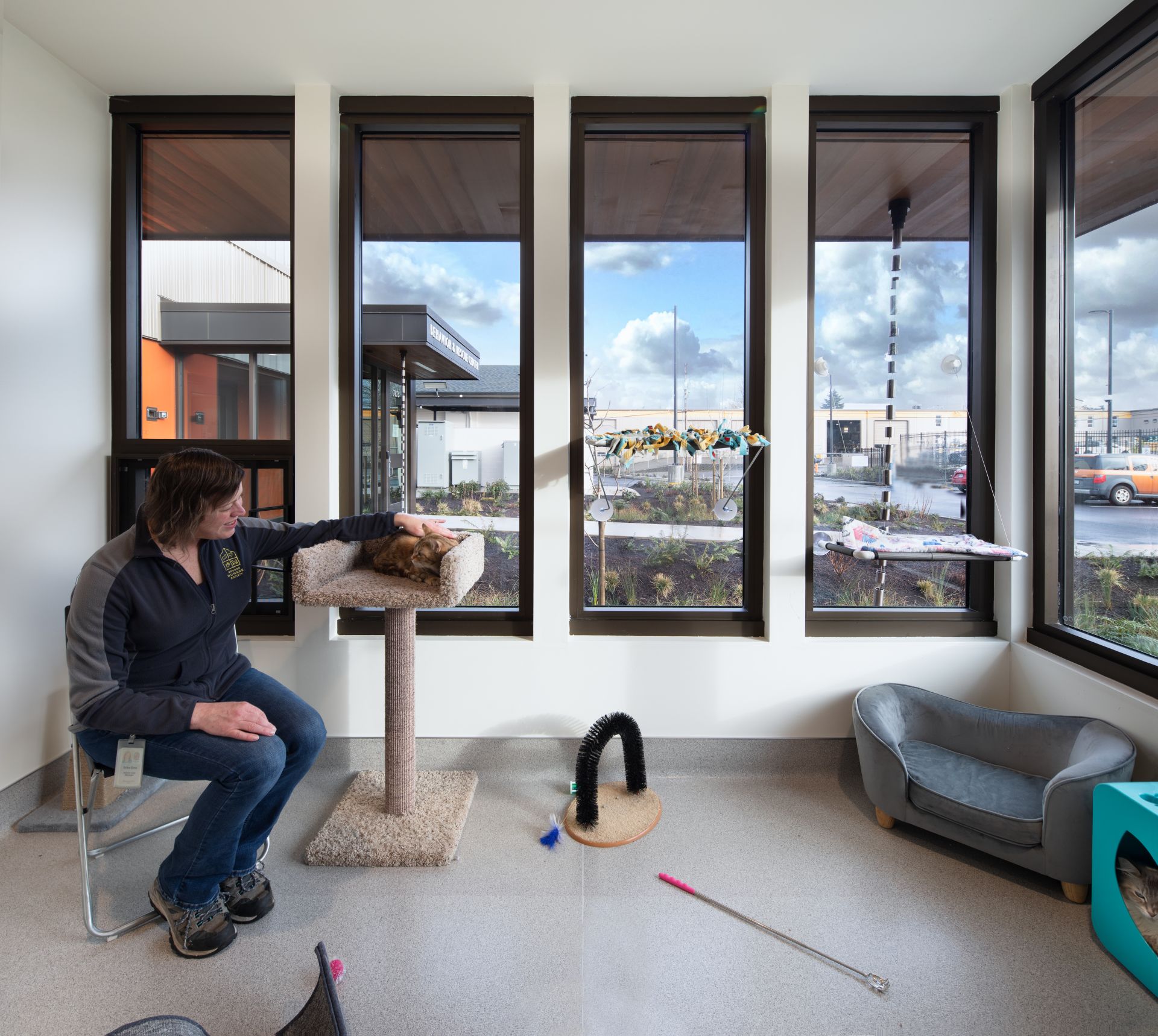
Today, BMOD program enrollees like Odin are housed in the Behavior & Rescue Center—built in 2022, this purpose-built space has reduced the length of stay for fearful and under-socialized cats by 48%.
Pawsitive Impact for Cats Like Odin
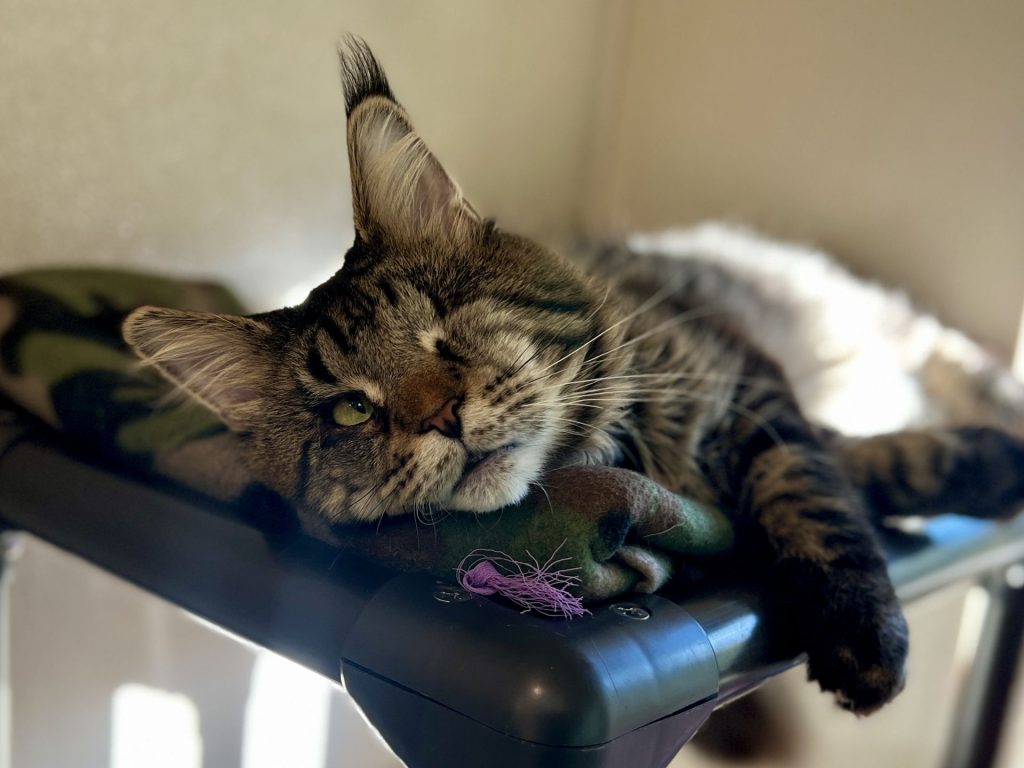
Odin arrived with 29 other Maine Coons from a case of neglect, all in very poor condition with a wide range of medical needs.
Upon his arrival, our team quickly identified that Odin would need specialized care. He was struggling and lashing out—cowering, thrashing, and even biting at the hands attempting to help him. Our Medical team began caring for his physical needs including a critical surgery to remove a dangerously infected eye and treatment for an upper respiratory infection. But even as he physically recovered, Odin’s anxiety and unease around people continued.
He was moved to the Behavior & Rescue Center to work with the BMOD team on his fearful behaviors. In the quiet comfort of the BRC cattery, Odin finally began to decompress and heal from his past trauma.
Because of donor support, Odin received care for his physical health as well as his mental and emotional health. Today, Odin is happy in a new home where he continues to make incredible progress.