Emergency Animal Sheltering Program
Oregon Humane offers staff and volunteers a unique opportunity to support other animal welfare agencies around the country during natural disasters or other large-scale emergencies through our Emergency Animal Sheltering program. To be certified in Emergency Animal Sheltering, staff and volunteers must complete extensive training and have advanced animal handling skills. This includes FEMA coursework on the Incident Command System, more than 100 hours of hands-on training in animal handling, and 18 hours of classroom training.
Oregon Humane currently has 42 staff and 31 volunteers certified in Emergency Animal Sheltering who can assist during natural disasters, large rescues, and other crisis situations. Additionally, Oregon Humane has partnerships with national organizations, like the ASPCA, who rely on the expert support of our responders during disasters.
This year’s wildfire season is already creating massive challenges in many areas of the country. In Oregon, more than 1 million acres have already burned, and our team is reaching out to partners throughout the state to offer assistance.
While our team has been responding to local wildfires—taking in five dogs from Umatilla County and eight kittens from Harney County when their owners needed to evacuate—the ASPCA put out an official call for help to support the Humane Society of the Pikes Place Region in Colorado, which was affected by the devastating Aspen Acres fires. Oregon Humane staff member and long-time volunteer, Laicina, raised her hand for her first ever EAS deployment.
Answering the Call
The call to deploy came quickly—with less than 72 hours of notice. Still, Laicina jumped at the opportunity to help. The chaos and unease that comes during evacuation orders resonated deeply with her, as she too evacuated her home during the especially grueling wildfire season in 2020. Inspired to be there for animals and families during their toughest days, Laicina swiftly organized the care of her own pet and her day-to-day work at Oregon Humane to make it happen.
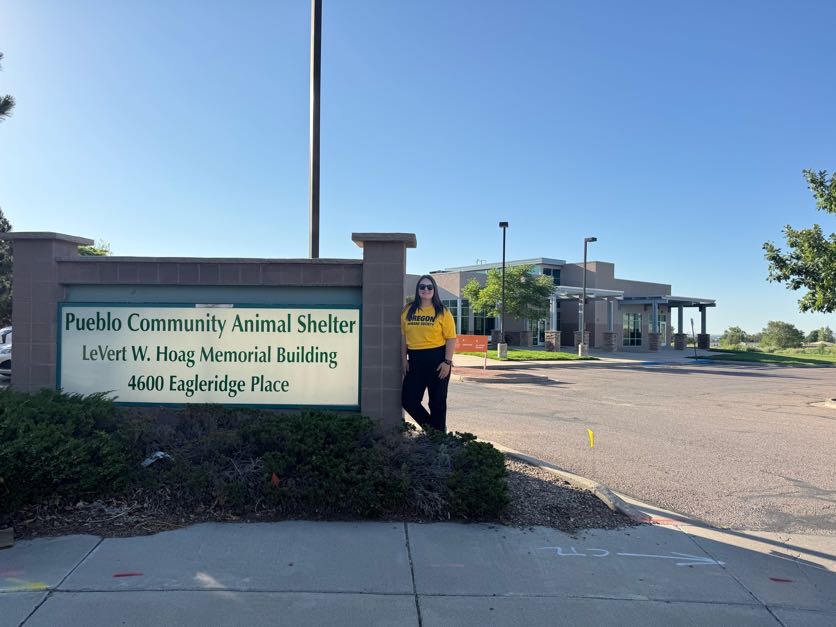
Soon, Laicina was on a plane headed for Pueblo, Colorado to help care for more than 160 animals at the Humane Society of the Pikes Place Region—approximately 30 miles from the fire zone.
In response to the wildfires, the shelter paused much of its usual operations and transferred any adoptable animals to their Colorado Springs campus. This ensured that ample space would be available to provide shelter for owned pets whose families were being displaced by evacuation orders, and for stray animals brought in by emergency responders in active fire zones.
Caring for Displaced Pets
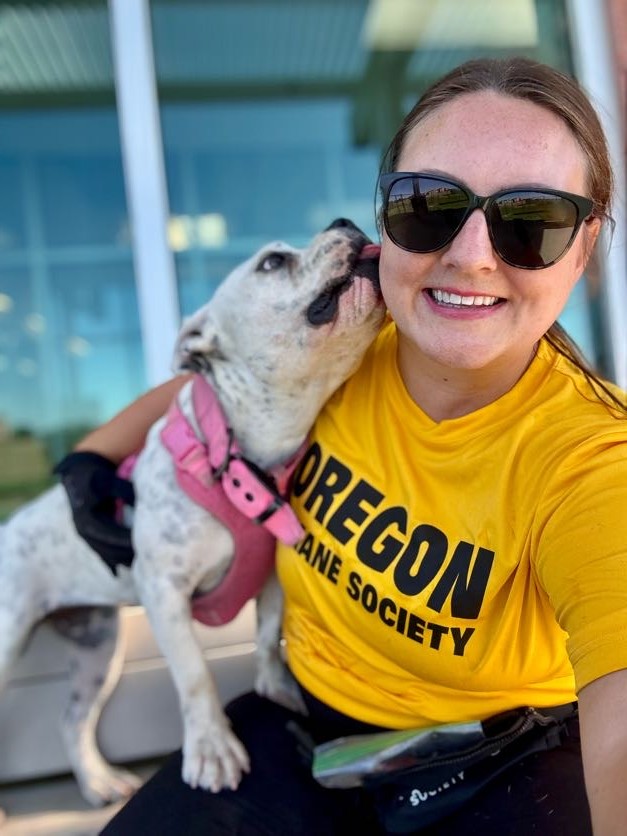
Laicina arrived alongside a team of nine ASPCA volunteers from across the country, and the team immediately dove into animal care duties. The group was divided into smaller teams to care for either cats or dogs—though the shelter was also housing reptiles, roosters, and other atypical species in need of care.
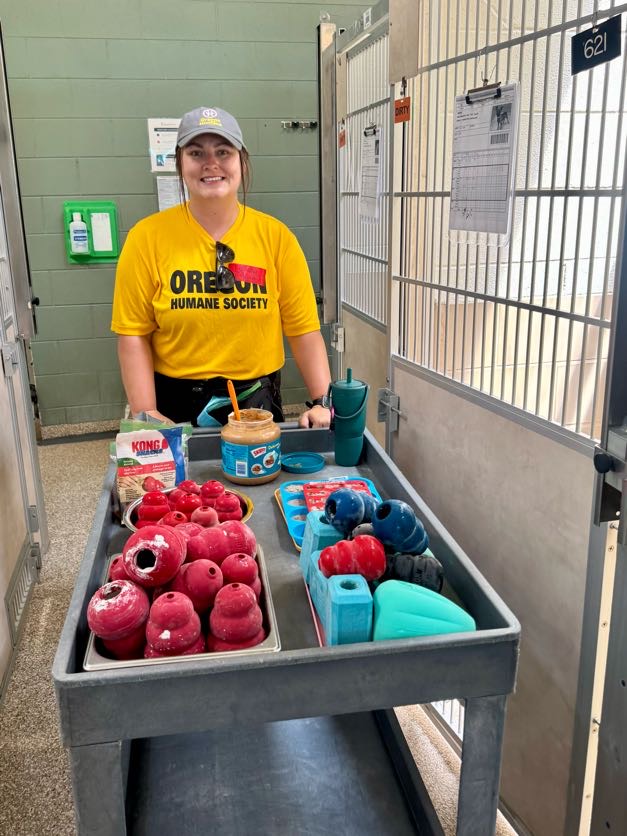
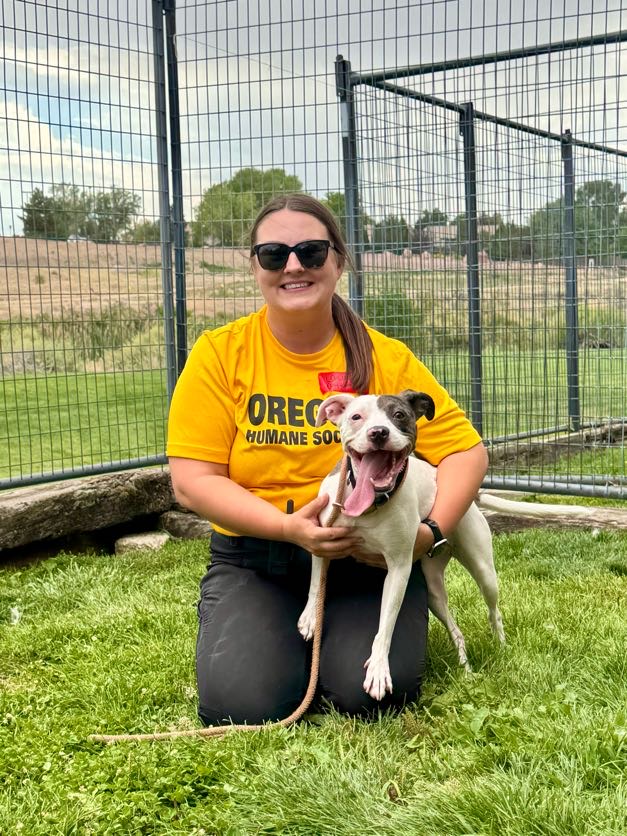
Laicina took on a lead role in caring for the dogs at the shelter. She was responsible for taking them on daily walks, and providing food, water, and enrichment activities—essential for these dogs, as many of them lived on farms and were not accustomed to the close quarters of the shelter environment.
With a large population of animals diagnosed with upper respiratory infections, Laicina was required to dress in full PPE while walking dogs with URI’s, often in temperatures well over 100 degrees.
The many URI-affected animals also meant daily, deep kennel cleaning was essential to prevent the spread of disease. As regular shelter staff worked to maintain shelter operations and provide expansive medical care for animals in need—the management of routine tasks by deployed volunteers like Laicina was essential to ensuring the animals received the high-quality daily care they needed.
During visiting hours, families were welcome to come to spend time with their pets who had found a safe landing place at the shelter. Many of these displaced families were living in temporary accommodations that were not pet-friendly or stable. As the pet owners juggled many uncertainties, knowing their animals were safe and cared for provided much-needed relief during a tenuous time.
As more towns were cleared for reentry, Laicina witnessed several tear-jerking reunions as families came to retrieve their pets and at last return home, together.
Managing Continuous Intake
Still, the fires continued to spread, growing another 1,000 acres during Laicina’s deployment. Luckily, they remained 61% contained thanks to the gargantuan effort of first responders and a reprieve from strong winds that can spread fires.
In between the daily care needed for the dogs, Laicina took on any additional tasks as she was able, including loading transfer vans with adoptable animals.
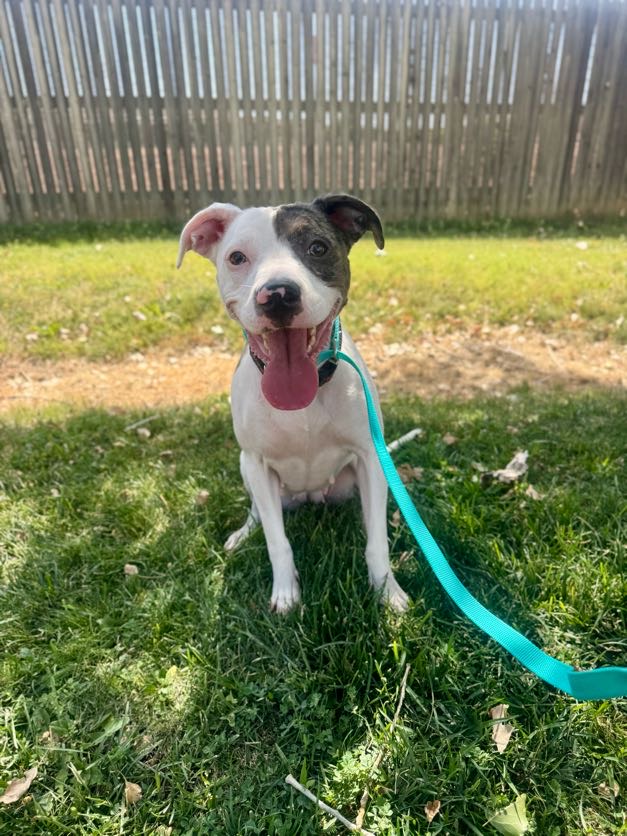
One adoptable dog Laicina bonded with was sweet Mimi, an active gal who loved to run and jump, and impress Laicina with her agility. By the time Laicina wrapped up her deployment, Mimi had been transferred and adopted into a new home—a quick turnaround that might not be possible without the additional support of volunteers.

Saying Goodbye
Even as Laicina’s days at the shelter came to an end, the fires continued to burn, and shelter demands ebbed and flowed as conditions changed each day. Laicina trained the next group of ASPCA volunteers that had arrived to help and soon began her goodbyes.
The unanticipated influx of animals has put a huge strain on the staff at Humane Society of the Pikes Place Region. For Laicina, helping the animals and bonding with the dogs was a huge honor, but it was providing much-needed relief to shelter staff, volunteers, and the families in Colorado—whose lives and routines have been upended—that she is most proud of.
Building Your Pet Emergency Kit
You may already have an emergency kit in your home for your family, but don’t forget to plan for your pets. Have these supplies on hand in the event of natural disasters or emergencies to keep your pet safe.
Pet Emergency Kit Contents
- Water, food, and treats: 2-week supply for each pet
- Pet and plan documents
- Ways to secure pets: leash, harness, carriers, crates, tents
- Pet first aid kit: medications, flea/tick/heartworm meds
- Blankets, towels, comfort items, familiar toys, pet owners’ clothing
- Sanitation supplies: cat litter box, litter, puppy-pads, newspaper, and garbage bags, paper towels and wet wipes
- Collapsible bowls, can opener if needed
- Grooming items, if needed
- Prepare and place a go-bag with your pet’s supplies; it will be much easier to grab and go if you need to evacuate
- Rotate food, medications and update info on a regular basis
Pet Documents & ID Preparation
- Updated collars and ID tags on cats and dogs with their name and your contact information.
- Microchip your pets. Make sure your contact info is updated with the microchip company.
Keep these documents in a waterproof container:
- Proof of ownership and recent picture of you and your pet
- Pet license information
- Medical records and vaccination documents (especially rabies)
- Feeding schedule or special health needs
- Microchip information
- Vet contact info
- Sheltering plans
- List of hotels and shelter
Emergency Animal Rescue
Interested in other ways we support animals and pet families in emergency situations? Learn more about Oregon Humane Specialized Technical Animal Rescue (OHSTAR).